
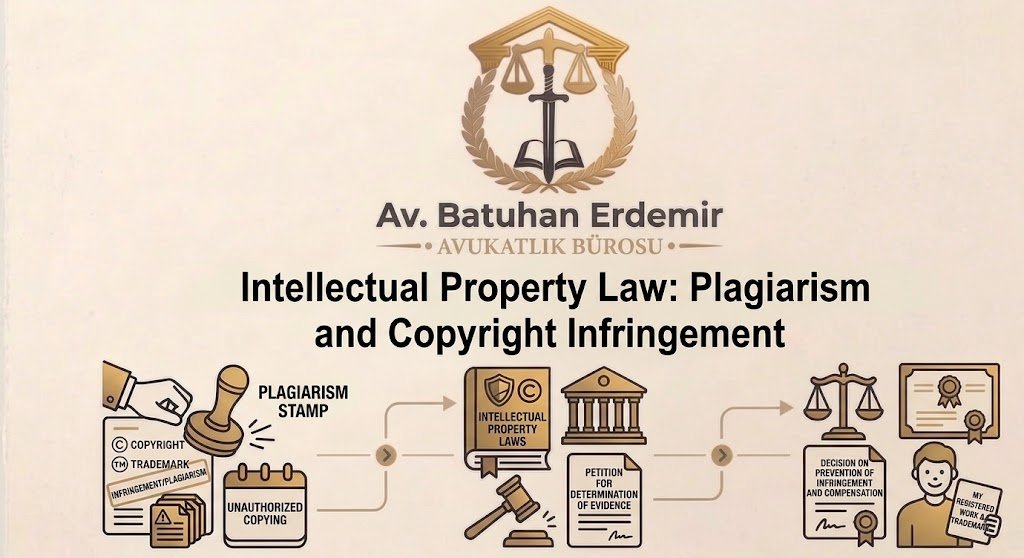
Intellectual Property Law: Plagiarism and Copyright Infringement
The realms of art, literature, software development (IT), and industrial design represent the most tangible manifestations of human intellect and creativity. However, these are also the sectors where intellectual labor can be most easily and ruthlessly copied. While the theft of physical property immediately sparks public outrage, the unauthorized copying (plagiarism) of a software architecture, an industrial project, or an artistic composition—crafted over months of meticulous labor—is frequently rationalized under the guise of “inspiration.”
At this critical juncture, intellectual property law comes into play. The fundamental purpose of the Law No. 5846 on Intellectual and Artistic Works (FSEK) and the Industrial Property Code No. 6769 (SMK) is to protect this creative labor—crystalized through the human mind—against the limitless copying power of unfair competition and capital, utilizing severe legal sanctions. In intellectual violations, the judicial process is not merely a tool for compensation; it is the most robust armor safeguarding the creator’s sectoral reputation and monopolistic rights.
Intellectual Property Law and the Plagiarism Crisis
Plagiarism (theft of ideas) is the most frequently encountered rule violation in today’s digital world. It encompasses a broad spectrum, ranging from copying the plot of a literary work to utilizing a software’s source code in another application with minor alterations, or constructing an architectural drawing without authorization.
According to copyright dogma, an “abstract idea” alone is not subject to protection; what the statute protects is the “concrete expression” of that idea bearing the unique characteristics of its creator. Refuting the defenses of “coincidental similarity” or “taking inspiration” put forward by individuals or corporations engaging in theft requires a highly technical burden of proof. This process is supported by algorithmic code comparisons, architectural survey analyses, and academic expert reports before the specialized courts.
Integrity of the Work and Usurpation of Moral Rights
The authority of an author, software developer, or artist over their own creation is not limited solely to the financial royalties (material benefits) they will receive. Modifying, truncating, or stripping the work from its original context without authorization to use it in a format that damages the creator’s honor (e.g., in a political or ideological campaign) constitutes a severe and direct assault on their “Moral Rights” (droit moral).
Under FSEK, the authority to prohibit modifications to the work and to be identified as the original creator belongs entirely to the artist. Since the violation of these rules holds the potential to obliterate the commercial and artistic reputation of the creator, halting the infringing action immediately is of vital importance.
Commercial Traps in Transfer and Licensing Agreements
The “Transfer of Financial Rights” or “Licensing” agreements signed by digital platforms, publishing houses, production companies, or advertising agencies with creators (freelancers or designers) can harbor massive corporate traps.
The complete transfer of ownership to a company and the marginalization of the original creator—often achieved by using vague expressions and disproportionate clauses such as “unlimited use across all media” in contracts—is the primary source of copyright crises. Preventing the limitless exploitation of artistic labor as a mere commodity is only possible by auditing these texts in strict compliance with the mandatory formal requirements of the law (the rule of being in writing and enumerating usage rights individually).
Operational Legal Offensive Against Copyright Infringements
In situations where creative labor is infringed upon, a proactive strategy is executed to instantly halt the unjust enrichment, replacing slow-moving classical litigation processes:
- Determination of Evidence and Expert Examination: The moment a suspicion of plagiarism arises, securing a “Determination of Evidence” before the Specialized Courts to scientifically register the copying (similarity ratio) through academic experts appointed from university faculties.
- Preliminary Injunction and Confiscation: Halting production lines, immediately blocking online access, and confiscating unauthorized printed books, copied industrial products (counterfeit designs), or source codes uploaded to digital platforms via “Preliminary Injunction” orders.
- Triple Damages (FSEK Art. 68): Transforming the unjust profit obtained by pirate institutions into material and moral compensation lawsuits, claiming “up to three times” the amount as the victim’s “loss of profit” (serving a penal and deterrent purpose) under the framework of FSEK.
Rational defense in intellectual disputes means maximizing the value of creative labor while stopping entities that generate unjust profits through the deterrent power of the law. For strategic representation in plagiarism allegations, drafting licensing agreements, trademark/patent disputes, and triple damages lawsuits, you can contact our expert legal team through the contact section of our website.
Legal Notice and Disclaimer
All articles, analyses, and legal evaluations contained on this website are provided for general informational purposes only and do not, under any circumstances, constitute a formal legal opinion, legal advice, or consultancy intended to be applied to a specific dispute or legal situation.
Due to the dynamic nature of legislation and the unique material characteristics of each concrete case, our firm accepts no liability for any loss of rights that may arise from actions taken or decisions made in reliance upon these texts.
You may contact us directly to have your legal problems resolved, to obtain a professional legal opinion based on your specific case file, or to schedule an appointment for verbal consultancy services.