
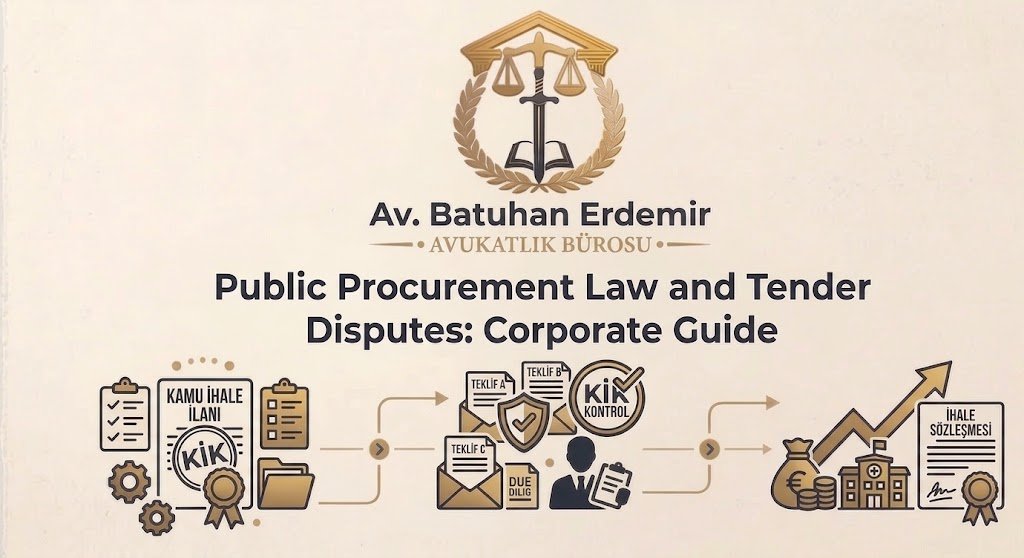
Public Procurement Law and Tender Disputes: Corporate Guide
State investments, massive infrastructure projects, and macro-scale goods and services procurements constitute a fierce commercial battlefield where billions of liras from the public budget are allocated to private sector actors. While the Public Procurement Law No. 4734 theoretically aims for transparency, equal treatment, and the efficient use of public resources, in practice, tender processes are a harsh arena where the discretionary power of administrative authorities clashes with the commercial objectives of companies.
In this highly competitive ecosystem, a minor procedural error in the tender document or a commission’s narrow interpretation of a formal requirement can lead to the unjust elimination of a company from a billion-lira project for which it has prepared for years. At this exact point, public procurement law and tender disputes stand as the most strategic legal shield protecting corporate capital against administrative arbitrariness.
Public Procurement Law and Tender Disputes: Specification Crises
The biggest corporate crisis encountered in state procurements is the unlawful use of “discretionary power” by administrations (tender commissions) to favor specific companies or eliminate unwanted competitors.
Violating the confidentiality of the estimated cost or narrowing technical specifications to point toward a specific brand or manufacturer (restricting competition) are the most frequent hurdles foreign and domestic companies face. Furthermore, micro-interpreting formal requirements in proposal letters (such as signature circulars, bid bond formats, or work experience certificates) to invalidate bids are administrative reflexes that severely damage fair competition. Against such restrictive tender documents, it is mandatory to exhaust complaint mechanisms within the statutory periods prior to the tender date.
Abnormally Low Tenders (ALT) and Administrative Objections
The legal struggle against tender commission decisions is a multi-layered mechanism where every second counts and is strictly bound by irreversible mandatory deadlines.
Particularly in “Abnormally Low Tender” (ALT) inquiries, it is common for the cost analyses (public institution market rates, proforma invoices) submitted by companies to be unjustly rejected by the commission. Companies that are unfairly eliminated or claim the tender was awarded to the wrong bidder must execute a flawless financial and legal petition strategy. This involves filing a “Complaint” to the administration, followed by an “Objection to Complaint” before the Public Procurement Authority (KİK) within the strict legal timeframes upon the official notification of the tender decision.
Ankara Administrative Courts and Stay of Execution
In cases where the rejection decisions rendered by the KİK are unlawful or merely ratify the arbitrary actions of the administration, the legal battleground shifts to the Ankara Administrative Courts.
Filing urgent “Annulment and Stay of Execution” lawsuits against KİK decisions prevents the hasty signing of the contract and the unjust transfer of the project to competitors. For projects where a tender is unlawfully canceled or awarded to another party, the company’s “loss of profit” and preparation expenses are subsequently collected from the administration through Full Remedy (Compensation) lawsuits.
Tender Rigging (TCK 235) and Penal Liability
Public procurements harbor not only commercial risks for company executives but also severe criminal law threats. Criminal investigations initiated on allegations of preventing competition, acquiring confidential information, or submitting forged documents (forgery in work experience certificates) directly constitute the crime of “Bid Rigging” (Tender Rigging) under Article 235 of the Turkish Penal Code No. 5237 (TCK).
In such heavy penal files, neutralizing unjust accusations by cross-examining administrative and financial decisions with technical analyses is the sole guarantee of the executives’ freedom and the company’s commercial reputation.
The rational defense we conduct in public tenders is the struggle to ensure your company’s labor, capital, and commercial future are not sacrificed to administrative errors. For strategic legal representation regarding objections to tender documents, KİK dispute processes, annulment lawsuits, and abnormally low tender defenses, you can contact us through the contact section of our website.
Legal Notice and Disclaimer
All articles, analyses, and legal evaluations contained on this website are provided for general informational purposes only and do not, under any circumstances, constitute a formal legal opinion, legal advice, or consultancy intended to be applied to a specific dispute or legal situation.
Due to the dynamic nature of legislation and the unique material characteristics of each concrete case, our firm accepts no liability for any loss of rights that may arise from actions taken or decisions made in reliance upon these texts.
You may contact us directly to have your legal problems resolved, to obtain a professional legal opinion based on your specific case file, or to schedule an appointment for verbal consultancy services.