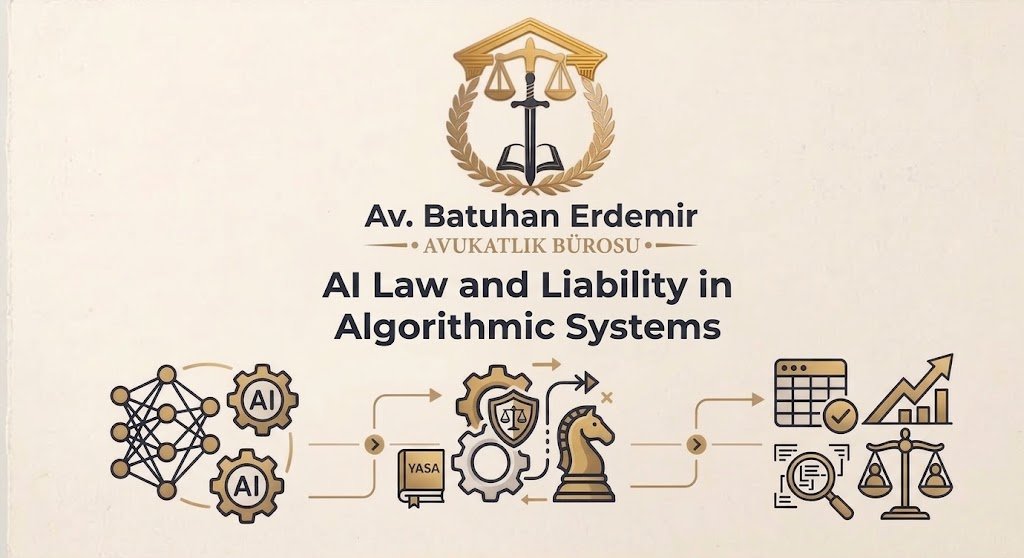
One of the greatest breaking points legal history has ever encountered is the positioning of self-learning, initiative-taking, and decision-generating algorithms at the very center of commercial and daily life. Stepping in precisely at this point, AI law is the most strategic discipline of the future, aiming to bridge the massive gap between the disruptive speed of technology and the sluggish nature of classical jurisprudence.
Technology companies, software developers, and holding companies integrating artificial intelligence into their operations are under massive regulatory risk regarding potential damages, data breaches, and copyright disputes caused by autonomous systems. Companies that fail to establish a solid legal infrastructure in this new ecosystem face not only multimillion-dollar compensation lawsuits but also the imminent danger of being banned from global markets.
Who Pays the Legal Bill When the Machine Decides? (The Black Box Problem)
If a vehicle equipped with a self-driving system is involved in a fatal crash, a medical diagnostic algorithm recommends the wrong treatment to a patient, or a Human Resources (HR) algorithm exhibits racial or gender bias during hiring, who bears the civil or criminal liability? The developer, the company providing the data, the individual using the system, or the artificial intelligence itself?
This “Black Box Problem”—where algorithms process millions of datasets to reach a decision in ways that often cannot be technically explained even by their developers—radically shakes classical law based on fault liability. In such disputes, the provisions of “Strict Liability” (Tehlike Sorumluluğu) and “Product Liability” found within the scope of the Turkish Code of Obligations No. 6098 (TBK) come to the forefront. The risk of these systems being subjected to a strict liability regime makes it mandatory for tech companies to conduct highly comprehensive legal risk analyses (AI Compliance) before launching their algorithms.
Intellectual Property Infringements and the Generative AI Crisis
The training of Generative AI models—such as Midjourney, ChatGPT, or DALL-E—by utilizing massive amounts of copyrighted materials (texts, articles, visuals, source codes) scraped from the internet without the consent of the rights holders has sparked a colossal copyright crisis on a global scale.
Determining who owns the copyright of the new works synthesized by AI from these materials, or whether the company training the algorithm will pay damages under the Law on Intellectual and Artistic Works No. 5846 (FSEK), constitute the fiercest disputes on the axis of AI law. Placing the intellectual property rights of artists, publishers, and companies infringed by algorithms under legal protection by auditing the algorithm’s dataset, or conversely, shielding AI startups from copyright lawsuits by keeping them within the boundaries of “fair use,” is the most critical legal practice of this era.
Deepfakes, Manipulation, and Reputation Assassinations
Cloning the facial and voice data (biometric data) of individuals or C-Level executives via algorithms and converting them into fake content indistinguishable from the original (Deepfake) has entirely altered the dimensions of corporate reputation assassinations, blackmail, and financial manipulation. In this new reality where one cannot even believe what the eye sees and the ear hears, cases of millions of dollars being defrauded from corporate accounts using fake voice recordings of CEOs (CEO Fraud) are rapidly increasing.
To protect the reputation of individuals and companies victimized by such algorithmic manipulations, it is imperative to promptly scrape (remove) fake content from global networks through blocking access under Law No. 5651, and to identify the perpetrators in tight coordination with cybersecurity experts.
The European Union Artificial Intelligence Act (EU AI Act) and Global Compliance
The AI Act, enacted by the European Union as the world’s first comprehensive artificial intelligence regulation, classifies algorithms based on the risks they carry (Unacceptable Risk, High Risk, Limited Risk). All technology companies operating in Turkey but offering software, tech, or e-commerce services to the EU market must comply with the AI Act rules due to the extra-territorial (cross-border) effect of this regulation. Otherwise, companies face the imminent threat of colossal administrative fines amounting to up to 7% of their global annual turnover.
Visionary Legal Practice in Future Disputes
In complex disputes arising on the axis of artificial intelligence and autonomous systems, a pioneering legal strategy is executed by taking universal technology norms, rather than merely local legislation, as a reference point. This arena is not only a field where legislation is followed from behind; it is the exact medium where the future of AI law is being written and where legal defense must be at its most visionary. To map out the legal compliance processes, copyright disputes, and algorithmic liability of your company’s AI projects, you can contact us through the contact section of our website.
Legal Notice and Disclaimer
All articles, analyses, and legal evaluations contained on this website are provided for general informational purposes only and do not, under any circumstances, constitute a formal legal opinion, legal advice, or consultancy intended to be applied to a specific dispute or legal situation.
Due to the dynamic nature of legislation and the unique material characteristics of each concrete case, our firm accepts no liability for any loss of rights that may arise from actions taken or decisions made in reliance upon these texts.
You may contact us directly to have your legal problems resolved, to obtain a professional legal opinion based on your specific case file, or to schedule an appointment for verbal consultancy services.
IT LAW, CRYPTO ASSETS, AND AI LIABILITY
The Lawlessness of the Digital World and Data Breaches (KVKK/GDPR)
IT law and the digital ecosystem represent the new world front where geographical borders disappear, legal regulations lag behind technology, and therefore chaos and rights violations are experienced most intensely. The leaking of companies’ massive databases (data breaches), the unlawful trade of personal data, and KVKK/GDPR sanctions generate billion-dollar penalty risks for institutions. Character assassinations conducted via social media, unjustified removal/blocking decisions, and “Right to Be Forgotten” demands are the modern-day defenses an individual must wage to protect their digital identity.
Blockchain, Smart Contracts, and Crypto Asset Disputes
The decentralized finance (DeFi) world, blockchain technology, and crypto assets constitute a domain where the rules of traditional legal systems (law of obligations and commercial law) are directly stretched, and code (“Code is Law”) becomes the law. The hacking of crypto asset exchanges, the transfer of billions of dollars to incorrect addresses due to coding errors in smart contracts, or fraud (rug-pull) projects require an international digital forensics expertise too technical to be resolved through classical enforcement and litigation pathways.
The Liability of Artificial Intelligence Algorithms and the Legal Future
Erroneous medical diagnoses, autonomous vehicle accidents, or copyright violations produced by artificial intelligence (AI) systems and autonomous decision-making mechanisms have carried the question “Who is the perpetrator of the crime or error?” to the most complex point in history. The issue of whether the programmer, the user AI model, or the company training the algorithm will be held liable represents the newest philosophical crisis of modern law.
Legal Defense Practice in the Digital World
The strategic process conducted to protect rights in the wild nature of IT and technology law encompasses the following stages:
- Obtaining Access Blocking and content removal decisions within hours within the framework of Law No. 5651 and KVKK provisions in cases of personal data violations and digital defamation campaigns;
- Tracing funds through chain analysis (blockchain forensics) expert reports and placing preliminary attachments on wallets in crypto asset thefts and blockchain-based frauds;
- Establishing the chain of liability (the fault-causal nexus) at the correct center through global technology standards and expert opinions in AI- and software-induced disputes.
The defense conducted in IT law is the will to protect the digital rights of humans and capital by passing them through the rational filter of the law in this new universe where lawlessness and digital anarchy prevail.
Legal Notice And Disclaimer
All articles, analyses, and legal evaluations contained on this website are provided for general informational purposes only and do not, under any circumstances, constitute a formal legal opinion, legal advice, or consultancy intended to be applied to a specific dispute or legal situation.
Due to the dynamic nature of legislation and the unique material characteristics of each concrete case, our firm accepts no liability for any loss of rights that may arise from actions taken or decisions made in reliance upon these texts.
You may contact us directly to have your legal problems resolved, to obtain a professional legal opinion based on your specific case file, or to schedule an appointment for verbal consultancy services.