
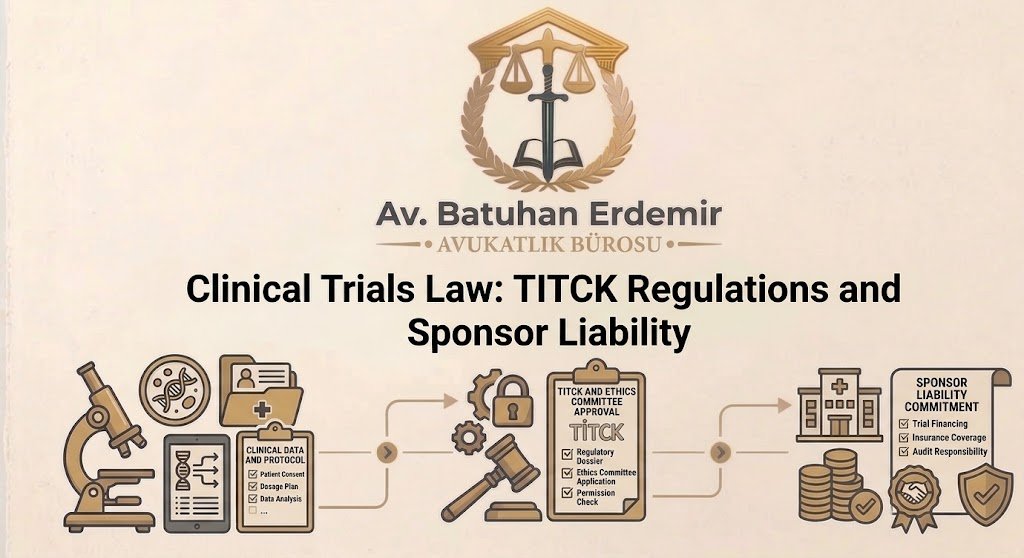
Clinical Trials Law: TITCK Regulations and Sponsor Liability
Clinical trials represent massive billions of dollars in R&D investments that shape the future of medicine, oncology, and pharmacology. However, because they involve the voluntary use of the human body, they are subject to the strictest and most uncompromising regulations in civil and administrative law. The extensive phase extending from passing an innovative drug or medical device through Phase trials to its market release may appear from the outside as a sterile trajectory of scientific progress; yet, in the background, it harbors a colossal legal and bureaucratic architecture.
The regulatory authority formed by the Turkish Medicines and Medical Devices Agency (TİTCK) and Independent Ethics Committees subjects the research process to microscopic administrative oversight. Failing to properly update a developed protocol, under-reporting pharmacovigilance (drug safety) data, or deviating from international Good Clinical Practice (GCP) standards can result in a project—costing millions of dollars and years of meticulous effort—being abruptly halted by the administration overnight.
Clinical Trials Law and Bioethics: The Consent Crisis
The most sensitive legal threshold of Phase studies is the “Informed Consent” forms utilized in the enrollment of volunteers. It is precisely at this juncture that the boundaries of clinical trials law and bioethics draw a definitive line between scientific vision and human dignity.
The volunteer subject must be informed transparently, comprehensively, and free from any coercion regarding the drug’s potential adverse (unexpected) effects, the risks of permanent damage, and the sponsorship background of the research. In cases where consent is not predicated on full and free will, or where information asymmetry is exploited, that signature becomes legally null and void. Any scientific intervention performed unlawfully on the human body directly constitutes the “Crime of Human Experimentation” under Article 90 of the Turkish Penal Code No. 5237 (TCK).
Adverse Events, Strict Liability, and the Criminal Law Threat
The greatest inherent financial and penal risk in clinical research is the emergence of unknown side effects (adverse events) that medical science cannot yet foresee. When such a complication occurs, or a test subject suffers permanent impairment or loss of life, the legal process ceases to be a mere “medical malpractice” lawsuit.
The main sponsor pharmaceutical company, the Contract Research Organization (CRO), and the principal investigator face the imminent peril of strict liability. A highly complex web of recourse is woven between hospital management and the corporate entities regarding who bears the ultimate responsibility. The strategic defense conducted in such moments of crisis relies on proving—through independent forensic pharmacology opinions and GCP compliance audits—that the resulting harm stemmed from the patient’s underlying conditions (comorbidities) rather than the research protocol itself, thereby absolving the institutions of criminal and financial liability.
Clinical Trial Agreements (CTA) and Administrative Judicial Practice
The proactive legal strategy executed to shield pharmaceutical companies (Sponsors), CROs, and researchers from heavy regulatory and penal risks encompasses the following stages:
- Establishing the CTA Architecture: During the drafting of Clinical Trial Agreements (CTA), flawlessly structuring the material liabilities arising from adverse events, indemnification/insurance policy recourse mechanisms, and intellectual property (patent/data) rights to avoid creating an asymmetric risk distribution among the parties.
- Stay of Execution in Administrative Courts: Swiftly filing annulment lawsuits in Administrative Courts in light of the Clinical Trials Regulation against unjust “suspension of research” or “license revocation/suspension” actions established by TİTCK or Ethics Committees based on formal deficiencies, bureaucratic delays, or abstract suspicions.
- Volunteer Rights and Product Liability: Strategically managing high-volume material and moral compensation (product liability) lawsuits filed against international pharmaceutical companies by volunteers whose rights were violated, whose consent processes were vitiated, or who suffered permanent health damages during clinical trials.
Our fundamental legal mission in clinical disputes is to prevent scientific endeavors and massive R&D investments that shape humanity’s future from being hindered by bureaucratic obstacles, while simultaneously ensuring the protection of bodily integrity under constitutional guarantee. For professional legal support regarding the drafting of CTAs, administrative objections against TİTCK sanctions, and adverse event compensation lawsuits, you can contact us through the contact section of our website.
Legal Notice and Disclaimer
All articles, analyses, and legal evaluations contained on this website are provided for general informational purposes only and do not, under any circumstances, constitute a formal legal opinion, legal advice, or consultancy intended to be applied to a specific dispute or legal situation.
Due to the dynamic nature of legislation and the unique material characteristics of each concrete case, our firm accepts no liability for any loss of rights that may arise from actions taken or decisions made in reliance upon these texts.
You may contact us directly to have your legal problems resolved, to obtain a professional legal opinion based on your specific case file, or to schedule an appointment for verbal consultancy services.